
CONDITIONS TREATEDAcupuncture for Sciatica
ALSO TREATED:
Headaches & Migraine · Skin Conditions · Burnout & Fatigue · Anxiety · Pain & Injuries · Back Pain · Hay Fever
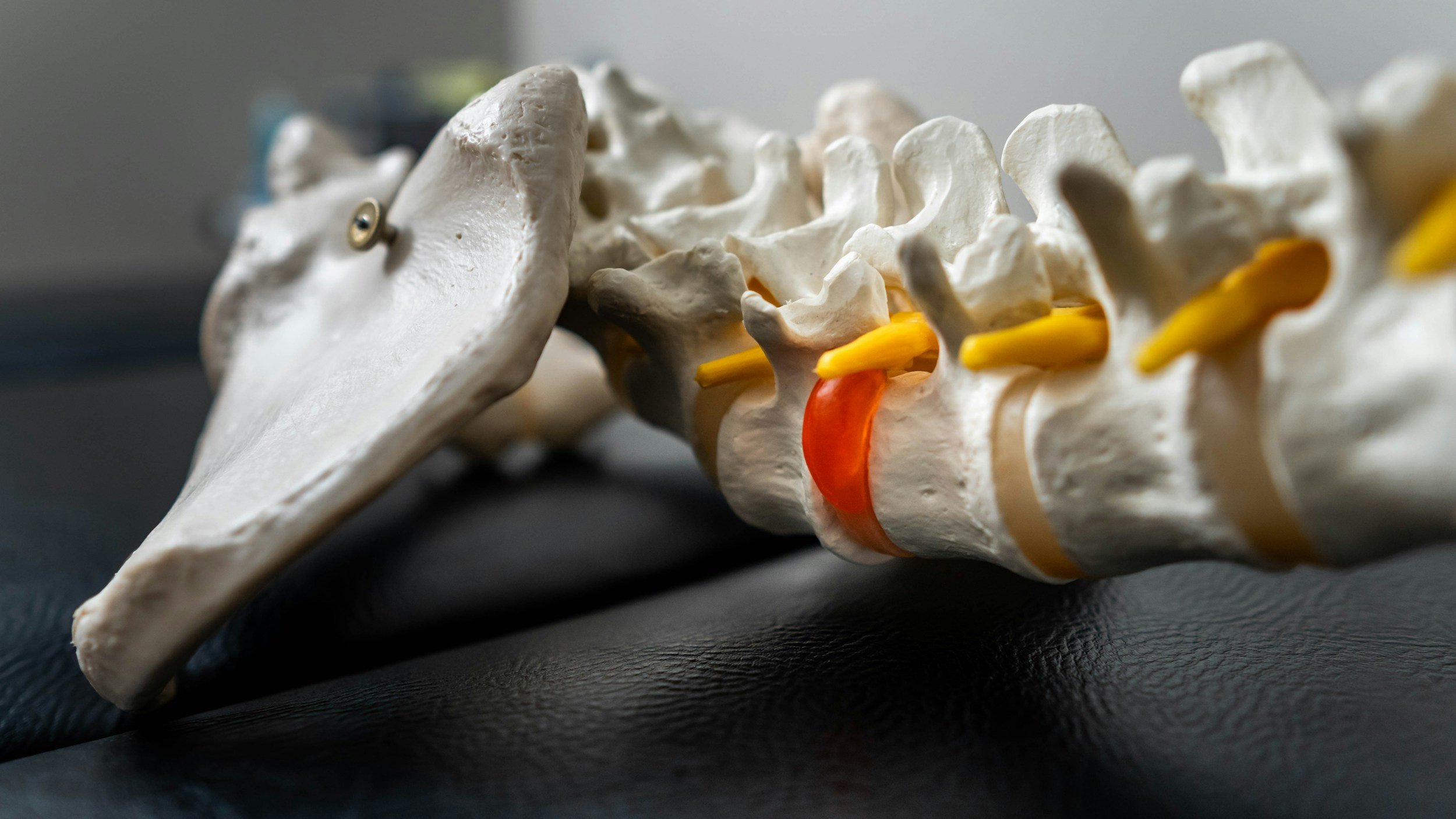
Sciatica is one of the more recognisable pain patterns people present with — a sharp, burning, or electric sensation that travels from the lower back or buttock down into the leg, sometimes as far as the foot. It can come on suddenly after a movement or build gradually over time. Either way, it tends to be persistent, disruptive, and difficult to ignore.
What is sciatica?
Sciatica refers to irritation or compression of the sciatic nerve, the largest nerve in the body. It runs from the lower lumbar spine through the buttock and down the back of the leg. When pressure is placed on it — by a disc herniation, muscle tension, or structural narrowing — pain, tingling, numbness, or weakness can radiate along its path.
Conditions commonly treated include:
Sciatica from lumbar disc herniation
Piriformis syndrome
Referred hip and buttock pain
Radiating pain into the thigh, calf, or foot
Numbness and tingling in the leg
Chronic sciatic patterns with recurrent flare-ups
A Chinese medicine perspective
In Chinese medicine, sciatica is understood primarily as obstruction along the Bladder channel, which runs from the inner corner of the eye, over the head, down the full length of the back, through the buttock, and along the posterior leg to the foot. This is the longest meridian in the body and closely maps the anatomical path of the sciatic nerve.
When Cold, Dampness, or Blood stagnation accumulates along this channel, circulation is impaired and pain follows the channel's trajectory. This accounts for the characteristic radiating quality of sciatic pain.
The Gallbladder channel runs along the lateral leg and is involved when pain or tension is felt more on the outer thigh and lower leg — common in piriformis syndrome and lateral sciatic patterns. In some cases, the Stomach channel is relevant where the pain extends to the front of the thigh or involves the hip flexors.
Underlying Kidney deficiency is often a contributing factor in chronic or recurring sciatica, as it weakens the structural support of the lower back and reduces the body's ability to clear obstruction effectively. Treatment addresses both the channel obstruction and the underlying pattern.
Balance Method acupuncture for sciatica
Balance Method acupuncture treats sciatica through a meridian-mirroring approach. Rather than needling at the site of pain, points are selected on channels that balance and correspond to the affected meridian — typically on the arms and hands, or the opposite leg.
For a Bladder channel sciatica, balancing points are selected from corresponding meridians following the established imaging and balancing systems of Dr. Richard Tan's method. This allows treatment to be precise, comfortable, and effective even in acute or highly sensitive presentations where local needling would be too provocative.
The distal approach means needles are rarely placed in the lower back or buttock during treatment — something most people find considerably more tolerable than expected.
How acupuncture helps
Acupuncture reduces sciatic pain by releasing muscular tension along the affected channel, improving circulation to the nerve and surrounding tissue, and downregulating the pain response. For piriformis-related sciatica, where muscle tension is compressing the nerve, this effect is often felt quickly.
For disc-related sciatica, acupuncture does not resolve the structural problem but can significantly reduce the associated inflammation, nerve irritation, and muscle guarding that amplify pain. Many people with confirmed disc herniations experience substantial relief and improved function.
Secondary complaints — disturbed sleep, reduced mobility, difficulty sitting or standing for long — are factored into the treatment plan alongside the main complaint.
What to expect
The first session includes a full intake covering the onset, location, and character of the pain, aggravating and relieving factors, and relevant health history. Pulse and tongue are assessed as part of the TCM diagnostic process.
For acute sciatica, two to three sessions in close succession is a common starting point. Chronic or recurring patterns typically require a longer course, with frequency reducing as the condition stabilises. Progress is assessed regularly and treatment adjusted accordingly.
Frequently asked questions
How many sessions will I need?Acute sciatica often responds within three to five sessions. Chronic or disc-related presentations typically require more, with a clearer picture of progress emerging after the first three to four treatments.
Can acupuncture help if my sciatica is caused by a herniated disc?Yes, in many cases. Acupuncture does not repair disc damage but can reduce the nerve irritation, inflammation, and muscle tension that drive the pain. People with diagnosed herniations often find meaningful and lasting relief.
Is piriformis syndrome treated differently? The underlying approach is the same, but the channel emphasis shifts — the Gallbladder channel becomes more central when lateral hip and buttock tension is driving the compression. Treatment is always tailored to how the pattern presents.
Do I need a referral from my GP?No. Acupuncture can be booked directly in the Netherlands without a referral. Costs may be partially reimbursed through supplementary health insurance (aanvullende verzekering).
Need more information or want to make an appointment?
Book online for a session in the clinic in Amsterdam Centre. If you have questions about acupuncture or how acupuncture can help you, get in touch via email.