
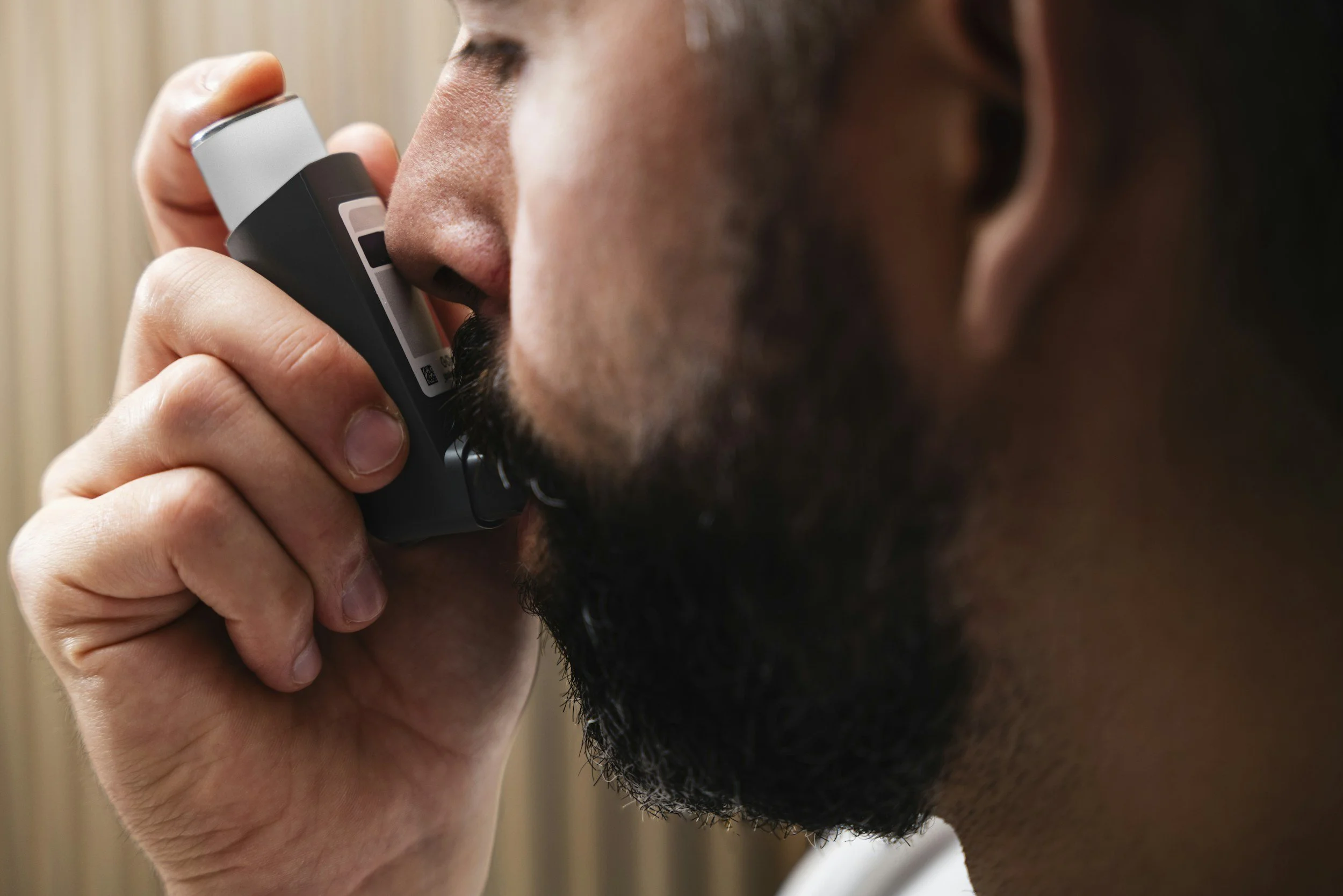
CONDITIONS TREATEDAcupuncture for Asthma
ALSO TREATED:
Headaches & Migraine · Skin Conditions · Burnout & Fatigue · Anxiety · Pain & Injuries · Back Pain · Hay Fever
Asthma is a chronic condition, and it is treated as one. Acupuncture does not replace inhalers or prescribed medication — particularly during acute episodes, which require fast-acting bronchodilation that acupuncture cannot provide. What it can do is reduce the frequency and intensity of episodes, support lung resilience over time, and address the inflammatory and nervous system patterns that make the airways reactive in the first place.
At Embodhi in Amsterdam, asthma is approached as a systemic condition with respiratory expression — not simply a breathing problem localised to the lungs.
How acupuncture helps with asthma
Asthma involves chronic airway inflammation and bronchial hyperreactivity — the airways respond to triggers (cold air, allergens, exercise, stress, infection) with disproportionate constriction. Acupuncture works by modulating the immune and inflammatory response, reducing baseline bronchial sensitivity, and regulating autonomic nervous system tone, which has a direct influence on airway calibre.
In TCM, asthma is understood primarily as a Lung deficiency pattern, often with involvement of the Kidney — which, in classical theory, governs the body's capacity to receive and root the breath. Where breathing is consistently shallow, effortful, or anxiety-driven, a Kidney-Lung axis treatment is frequently used. The Spleen is also relevant: in TCM, Phlegm — produced by a weakened digestive system — is considered the root cause of the obstructive quality of asthma. Treating the Spleen to reduce Phlegm production, alongside strengthening the Lung and Kidney, forms the basis of a constitutional approach to the condition.
This is distinct from acute symptom management. In practice, treatment works across both levels — addressing immediate respiratory symptoms while building underlying resilience over a course of sessions.
Stress and emotional load are consistently relevant. Anxiety and chronic tension directly affect breathing mechanics and autonomic regulation, and are factored into every treatment plan for asthma patients.
Asthma and related complaints
Asthma frequently overlaps with hay fever, eczema, and food sensitivities — what is sometimes described as the atopic triad. Where multiple allergic or inflammatory conditions are present, treatment addresses the shared immune dysregulation rather than each condition separately. Sleep quality, stress, and digestive health are all considered as part of the same systemic picture.
Prescribed asthma medication is never adjusted without medical supervision. Acupuncture works best as a long-term complement to ongoing medical management, not as a standalone replacement.

Need more information or want to make an appointment?
Book online for a session in the clinic in Amsterdam Centre. If you have questions about acupuncture or how acupuncture can help you, get in touch via email.