
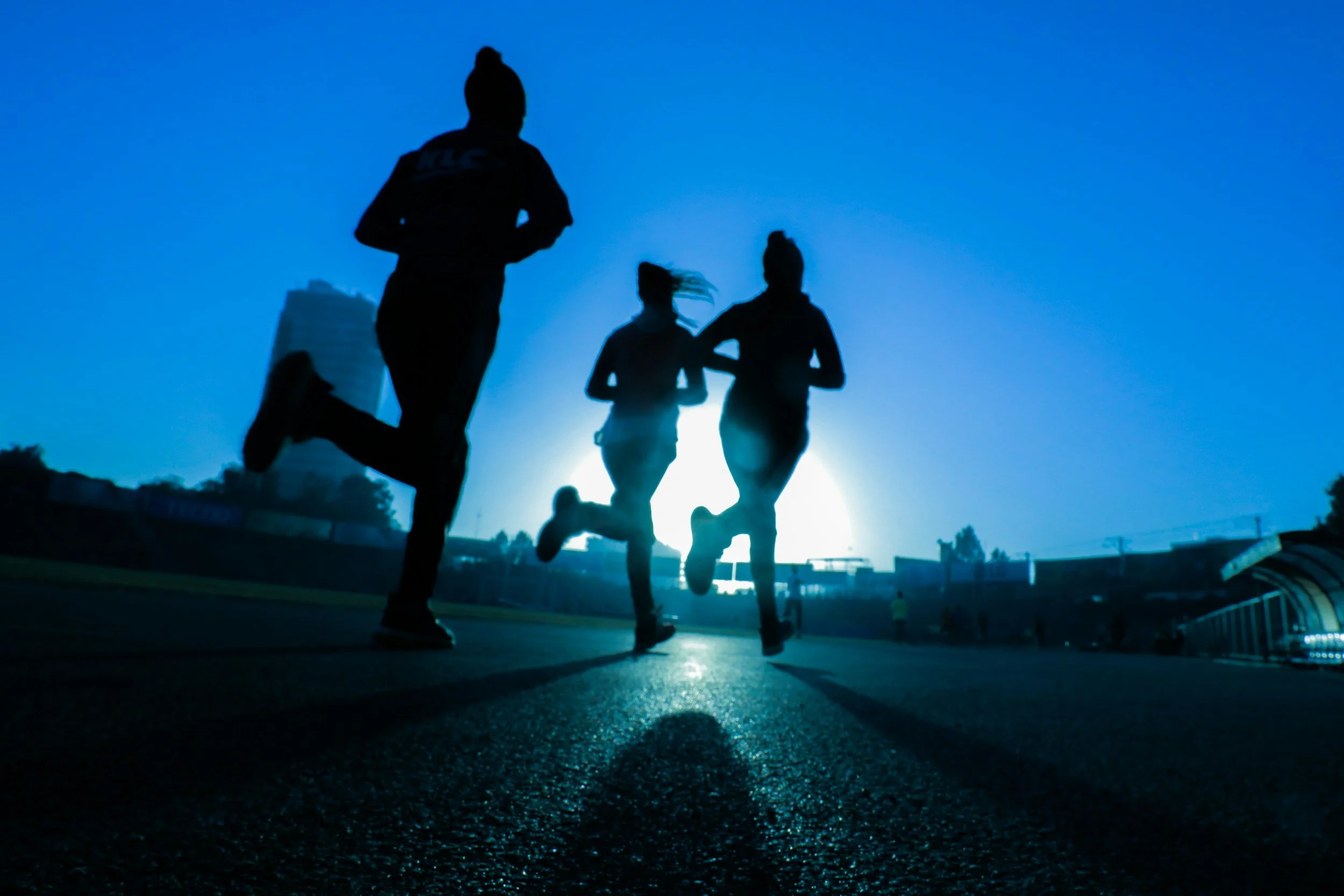
CONDITIONS TREATEDAcupuncture for Sports & Physical Performance
ALSO TREATED:
Headaches & Migraine · Skin Conditions · Burnout & Fatigue · Anxiety · Pain & Injuries · Back Pain · Hay Fever
Whether training recreationally or at a competitive level, physical strain and injury are an inevitable part of sport. The body is resilient, but it needs support, especially when demands are high and recovery time is short. Acupuncture is used both to treat existing complaints and to support athletes in staying injury-free.
Why acupuncture for athletes
Sport requires more than fitness. The heart, lungs, muscles, tendons, and joints all need to adapt continuously to the demands placed on them. When that adaptation is incomplete, through overtraining, poor recovery, or accumulated strain, minor issues develop into significant injuries. Acupuncture supports the body's ability to regulate itself, maintain balance, and recover efficiently. Many athletes use it not only when something is wrong, but as a regular part of their training and recovery routine.
Recovery is where adaptation happens. Training provides the stimulus; the body changes during the rest that follows. When recovery is insufficient, whether through volume, stress, poor sleep, or inadequate nutrition, the adaptation cycle breaks down. Tissue accumulates microtrauma faster than it can repair. The nervous system stays in a state of activation that impairs both physical recovery and sleep quality. Performance plateaus or declines, and injury risk rises. Acupuncture addresses this cycle directly, supporting the physiological conditions in which genuine recovery can occur.
In TCM terms, sustained athletic demand draws heavily on Qi, Blood, and Jing. The Liver governs tendons and ensures the smooth flow of Qi and Blood through the channels that supply them. The Kidney governs bone and is the root of constitutional vitality and physical resilience. The Spleen generates the Qi and Blood that muscle and connective tissue depend on for repair. When training load consistently exceeds what these systems can sustain, the result is not simply fatigue but a progressive depletion that expresses as recurring injury, slow recovery, persistent tightness, and a loss of the springiness and responsiveness that characterise a well-recovered body. Treatment addresses whichever of these systems is under the most strain, alongside the local complaint.
Acupuncture for sports injuries
When an injury has occurred, acupuncture is applied to support the specific tissue involved, stimulating local circulation, reducing inflammation, and creating the conditions for healing to progress efficiently. The Balance Method allows treatment through distal points on the opposite limb or a corresponding channel, which means the injured area itself is often not needled directly. This is particularly useful in acute injuries where local tissue is too sensitive for direct needling, and in presentations where previous local treatment has produced limited results.
Complaints commonly treated include:
Acute and chronic back pain
Neck, shoulder, and arm complaints
Repetitive strain and overuse injuries
Post-injury stiffness and compensation patterns
Elbow, wrist, and joint pain
Compensation patterns deserve particular attention in athletes. An ankle injury changes running mechanics. A tight hip alters load distribution through the lumbar spine. A shoulder complaint shifts how the neck is held under fatigue. These secondary patterns often become the more persistent complaint, and treatment addresses the full compensation chain rather than the original injury site alone.
Performance, prevention, and recovery
Acupuncture is used preventively as well as therapeutically. Addressing subtle imbalances, areas of reduced circulation, early tendon sensitivity, or signs of systemic depletion, before they develop into injury keeps training consistent and reduces the cumulative damage that shortens athletic careers. Regular treatment during high-volume training blocks supports recovery between sessions and helps the nervous system maintain the range between activation and rest that performance depends on.
Physical and mental load are closely connected. Chronic stress, poor sleep, and emotional pressure all impair physical recovery and raise injury risk. These are not separate concerns from athletic performance, and they are factored into treatment planning accordingly.
Need more information or want to make an appointment?
Book online for a session in the clinic in Amsterdam Centre. If you have questions about acupuncture or how acupuncture can help you, get in touch via email.