
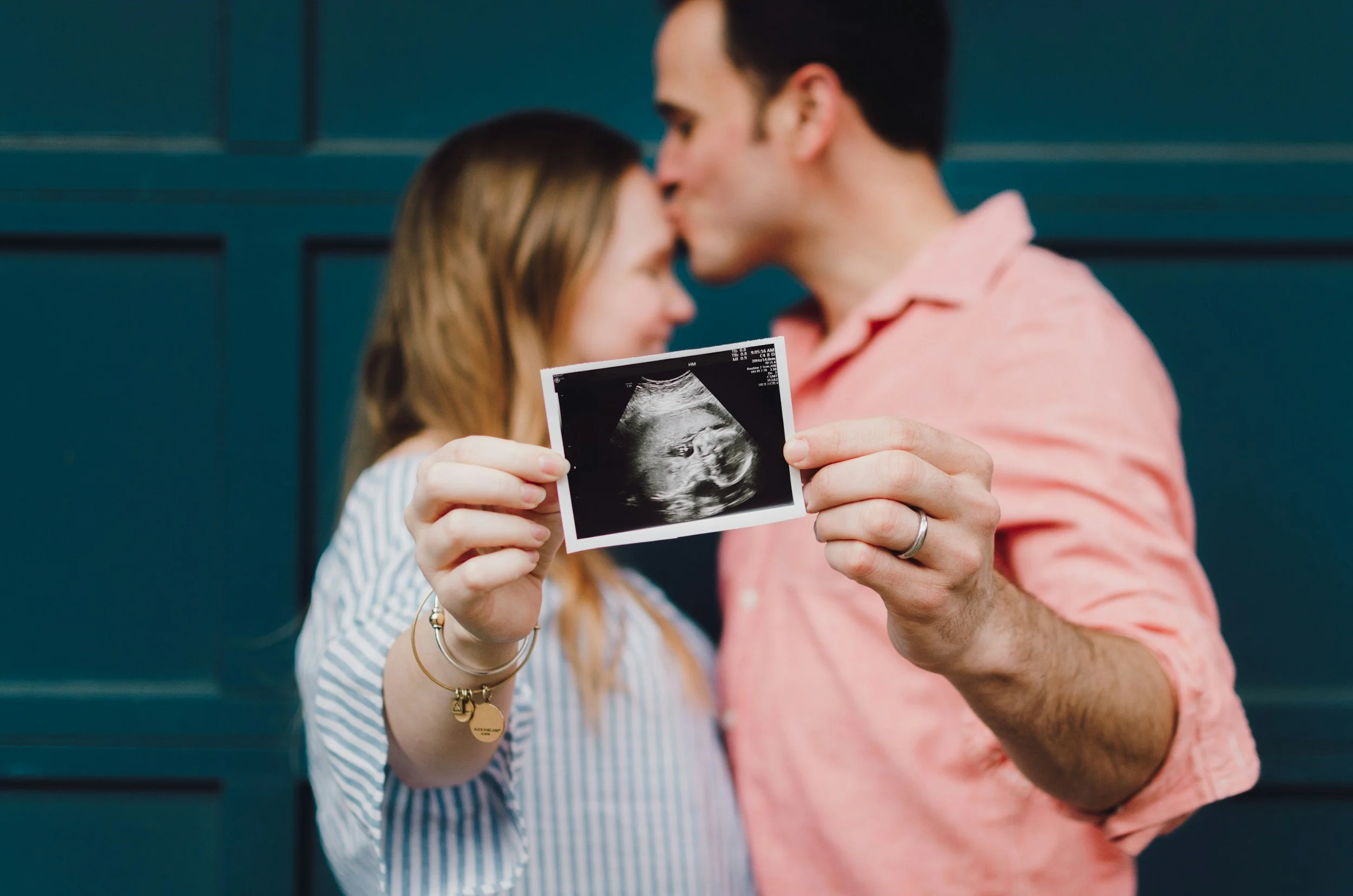
CONDITIONS TREATEDAcupuncture During Pregnancy
ALSO TREATED:
Headaches & Migraine · Skin Conditions · Burnout & Fatigue · Anxiety · Pain & Injuries · Back Pain · Hay Fever
Acupuncture is safe during pregnancy provided the practitioner is trained in pregnancy care and understands which points and approaches are appropriate at each stage. Pregnancy support is offered across all three trimesters and into the postpartum period, with treatment adapted to what each phase of pregnancy asks of the body.
Pregnancy care was not something I anticipated specialising in when I trained. I always had the idea that women's health and pregnancy support was something more naturally suited to women practitioners — a woman-to-woman relationship. But over years of practice, pregnant women have found their way to the clinic, and I've worked with them through all stages of pregnancy and postpartum recovery. What I've discovered is that I genuinely love this work. I'm deeply invested in understanding the patterns of women's health, in supporting women through the profound changes pregnancy brings and in being a practitioner they can trust during this time. It's become one of the areas of my interest.
Pregnancy is a significant physiological event. The body reorganises itself entirely: hormonally, structurally, and energetically. TCM has a long clinical history of supporting women through this process, and the two frameworks — classical and biomedical — complement each other well in practice.
The first trimester
The first trimester is often harder than expected. For those who have been through a fertility journey, the relief of a positive test is frequently accompanied by anxiety — about miscarriage, about symptoms, about whether things are progressing as they should. Even without that history, the first trimester brings significant physical demands: nausea, fatigue, emotional sensitivity, and the particular difficulty of navigating all of this before most people know you are pregnant.
In TCM terms, the first trimester is a period of consolidation. The body is directing substantial resources toward the developing pregnancy, and the Ren channel — which governs uterine function and reproductive vitality — is under significant demand. Treatment at this stage focuses on stabilising the pregnancy, supporting the body's resources, and addressing the symptoms that make the first trimester difficult to get through.
Common presentations treated in the first trimester:
Nausea and vomiting, including severe morning sickness
Fatigue and low energy
Anxiety and emotional dysregulation
Spotting or threatened miscarriage alongside medical monitoring
Headaches and sleep disruption
Sessions are typically weekly in the first trimester, particularly for those with a history of miscarriage or significant symptoms. The approach is gentle — this is not a phase for aggressive treatment, but for careful, consistent support.
The second trimester
The second trimester tends to be the most physically settled period of pregnancy. Nausea usually lifts, energy returns to some degree, and the risk of miscarriage drops significantly. Treatment frequency reduces accordingly — monthly sessions are typical, with additional appointments when specific complaints arise.
As the pregnancy becomes more visible and the body adapts to the growing weight and postural demands, a new set of complaints often emerges.
Common presentations treated in the second trimester:
Back pain and pelvic girdle discomfort
Headaches
Constipation and digestive changes
Insomnia and disrupted sleep
Swelling and fluid retention
Carpal tunnel symptoms
Anxiety and stress
Elevated blood pressure as supportive care alongside medical management
Skin irritation and itching
The principle throughout is the same: treat what is present, support what the body is already doing, and keep the nervous system regulated. Stress load, sleep quality, and digestive function are all considered as part of each session.
The third trimester
The third trimester brings its own physical challenges — the weight and position of the baby affects sleep, movement, and comfort in ways that accumulate over weeks. It is also the phase where preparing the body for labour becomes a treatment priority.
Labour preparation acupuncture typically begins from week 36 onward. The aim is to support cervical ripening, encourage optimal fetal positioning, reduce stress hormones that can interfere with the natural onset of labour, and prepare the body for the physical demands ahead. Treatment at this stage is more active than earlier in pregnancy and is adapted week by week as the due date approaches.
Common presentations treated in the third trimester:
Labour preparation from week 36
Aches, joint discomfort, and postural strain
Anxiety about birth
Sleep disruption
Breech positioning
Breech positioning and moxibustion
When a baby remains in a breech position in the final trimester, moxibustion — the application of heat from burning mugwort — is applied to a specific point on the little toe. This technique has been used in Chinese medicine for centuries and has been studied in clinical trials. The heat applied to this point stimulates hormonal changes that encourage uterine activity and fetal movement, creating conditions in which the baby is more likely to turn to a head-down position.
Treatment is most effective between weeks 33 and 36, with week 34 considered the optimal window. It is non-invasive, can be continued at home with guidance, and carries no risk to the pregnancy. It is always done alongside appropriate obstetric monitoring.
Balance Method acupuncture during pregnancy
In Balance Method acupuncture, pregnancy complaints are approached through the channel systems relevant to the location and nature of the symptom — without needling contraindicated points or the abdomen directly. This is one of the practical strengths of the Balance Method in pregnancy care: the entire treatment is applied distally, through points on the arms and legs, making it safe and comfortable at every stage.
For physical complaints such as back pain, pelvic girdle pain, and carpal tunnel, treatment follows the standard channel analysis — identifying the affected meridians by location and applying the balancing structure through corresponding points on the opposite limb.
For nausea, fatigue, and digestive complaints, the primary channels involved are the Stomach, Spleen, Kidney, and Liver — the Yangming, Taiyin, Shaoyin, and Jueyin systems that govern the middle and lower Jiao. These are treated through their corresponding balancing meridians on the arms and lower legs.
For labour preparation and support of optimal fetal positioning, treatment focuses on the channels governing the lower abdomen — the Liver (Jueyin), Kidney (Shaoyin), Stomach (Yangming), and Spleen (Taiyin) — alongside specific points with a known effect on uterine activity and fetal movement. Point selection is precise, intentional, and always appropriate to the week of pregnancy.
The postpartum period
Birth is a major physical event, and recovery takes longer than modern life tends to allow for. In TCM, the postpartum period is understood as a time of significant Blood and Qi depletion — the body has given an enormous amount, and what follows birth is as much about rebuilding as it is about recovery.
Postpartum acupuncture focuses on:
Physical recovery and pain relief after birth
Supporting emotional regulation and reducing postnatal anxiety
Sleep support — both the disruption caused by a newborn and the difficulty many women have returning to deep sleep
Fatigue and energy restoration
Lactation support where relevant
The postpartum period is also a time when mood disorders are common and frequently underrecognised. Postnatal anxiety and depression exist on a spectrum — from the normal emotional adjustment of new parenthood to more significant presentations that require professional support. Acupuncture offers meaningful support across that spectrum, and where more specialist input is needed, that is said clearly.
There is no fixed timeline for postpartum care — some women come once, others continue for several months. Treatment adapts to where things are at each stage of recovery.
A note on safety
Acupuncture is safe during pregnancy when performed by a practitioner with specific training in pregnancy care. Certain acupuncture points are contraindicated during pregnancy and are avoided entirely. All treatments are adapted to the stage of pregnancy, and any concerns that fall outside the scope of acupuncture are referred to the appropriate medical provider without hesitation.
Frequently asked questions
Is acupuncture safe in the first trimester? Yes, when performed by a practitioner trained in pregnancy care. Certain points are avoided entirely during pregnancy, and treatment in the first trimester is kept gentle and carefully adapted to the stage. Many people find it particularly helpful during this phase, when symptoms are significant and other options are limited.
Can acupuncture help with severe morning sickness? Yes. Nausea and vomiting in pregnancy — including hyperemesis gravidarum — respond well to acupuncture. Treatment focuses on the Stomach and Spleen channel systems and is adapted to what the person can tolerate during a session.
When should labour preparation acupuncture start? From week 36 onward. Sessions are typically weekly from this point, increasing in frequency closer to the due date. The aim is to prepare the body gradually rather than to force the onset of labour.
Can acupuncture turn a breech baby? Moxibustion at a specific point on the little toe can encourage fetal movement and improve the likelihood of the baby turning to a head-down position. It is most effective between weeks 33 and 36 and is always used alongside obstetric monitoring.
Do I need a referral from my GP or midwife? No. Acupuncture during pregnancy can be booked directly. Any concerns outside the scope of acupuncture are always referred to the relevant medical provider. Costs may be partially reimbursed through supplementary health insurance (aanvullende verzekering).
Need more information or want to make an appointment?
Book online for a session in the clinic in Amsterdam Centre. If you have questions about acupuncture or how acupuncture can help you, get in touch via email.